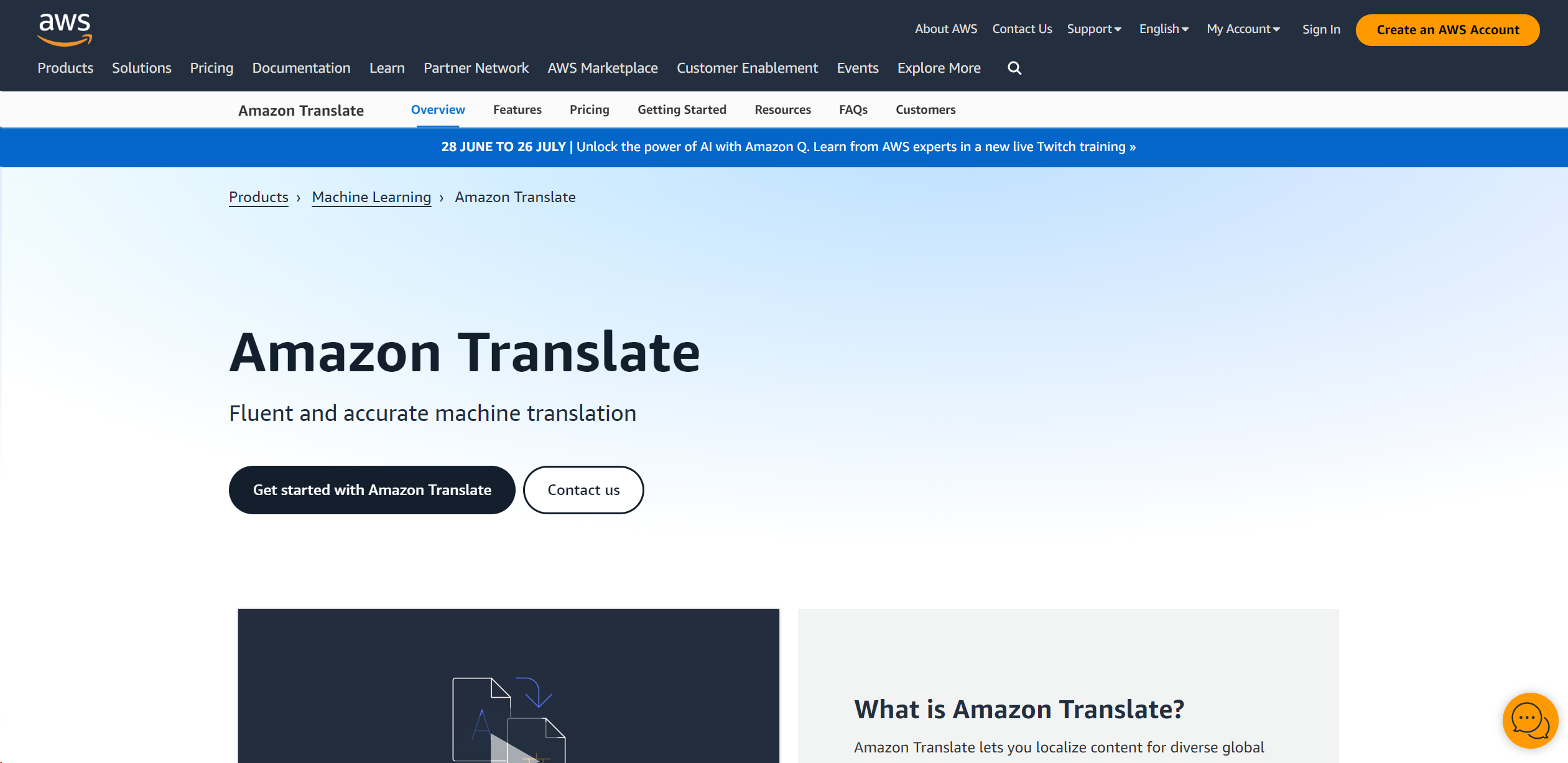
About Amazon Translate
Advertiser Disclosure: Futurepedia.io is committed to rigorous editorial standards to provide our users with accurate and helpful content. To keep our site free, we may receive compensation when you click some links on our site.
Key Features
- High-Quality Translations: Leverages advanced machine learning models to deliver accurate and context-aware translations.
- Real-Time and Batch Translation Capabilities: Offers both immediate translation for live communication and batch processing for larger datasets.
- Extensive Language Support: Supports a wide array of languages, facilitating broad geographic and demographic coverage.
- Customization Options: Allows users to adapt translations to specific vocabulary and terminology used within their business or industry.
Pros & Cons
Pros
- Scalability: Efficiently handles spikes in demand without compromising on the speed or accuracy of translations.
- Cost-Effective: Priced competitively to reduce the financial burden on businesses, making advanced translation technology accessible to all.
- Integration-Friendly: Easily integrates with other AWS services and various third-party applications to enhance workflow automation.
- Continuous Improvement: Regularly updated models to improve translation quality over time based on new data and user feedback.
Cons
- Complex Pricing Structure: While competitive, the pricing can be complex and may require careful analysis to understand potential costs fully.
- Language Limitations: Despite a broad selection, there are still languages and dialects not fully supported.
- Technical Knowledge Required: To maximize its capabilities, a certain level of technical expertise is necessary, which might be a barrier for non-technical users.