About Gamma
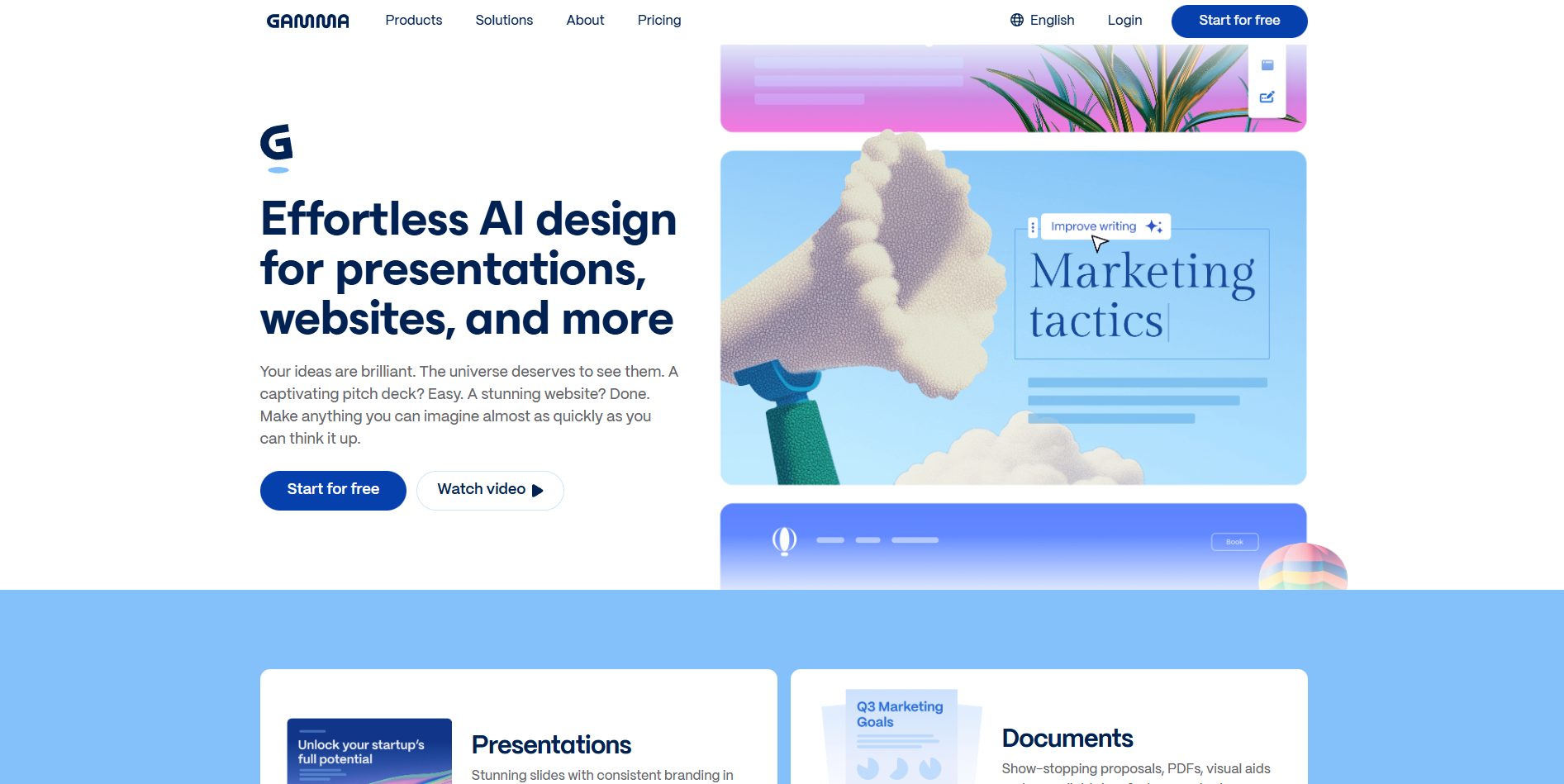
Gamma is an AI presentation, document, and web-page creator that turns plain text or existing files into polished, interactive decks in under a minute. It focuses on visual storytelling, using large language and image models to generate content structure, design, and on-brand layouts with minimal manual formatting. Aimed at knowledge workers, educators, marketers, founders, and sales teams, it replaces traditional slide tools with a card-based format that feels closer to editing a modern doc than wrestling with PowerPoint.
Key Features
- AI-first deck generation: Create full presentations, docs, or microsites from a prompt, outline, URL, or imported PDF/PPTX, with automatic structuring into cards and sections.
- One-click styling and themes: Restyle entire decks in a single action, applying smart themes, custom color palettes, and typography while keeping layouts consistent.
- Interactive, web-native content: Embed YouTube, Loom, Figma, charts, and more; decks behave like responsive web pages with dark mode and mobile-friendly viewing.
- Real-time collaboration: Multiple users can edit, comment, and tag teammates at once, with version history and shared workspaces on paid tiers.
- AI writing and refinement: Rewrite, shorten, expand, or rephrase slide copy, summarize long text, and auto-generate talking points or speaker notes.
- Analytics and publishing: Publish decks as shareable links with view and engagement analytics, plus export to PDF, PowerPoint, PNG, and Google Slides.
- Branding and custom domains: Higher tiers support brand kits (logos, fonts, colors) and publishing decks on custom domains for a more polished client-facing experience.
- API and advanced models: Pro and above unlock API access and more advanced text, image, and even video model usage for heavier automation.
Pros & Cons
Pros
- Huge time savings: Cuts hours of slide building down to minutes, especially for first drafts, recurring reports, and pitch decks.
- Design quality: Produces consistently clean, modern layouts even for users with no design background.
- Strong collaboration story: Feels like a shared online document, which reduces version-control chaos compared with email-based slide sharing.
- Flexible formats: Works for presentations, documents, landing-page–style sites, and social content, so teams do not need separate tools.
- Scalable for serious teams: Advanced analytics, brand control, custom domains, and API support suit agencies and growth-stage companies.
Cons
- Learning curve for the format: The card-based, web-style approach can feel unfamiliar to users tied to traditional slide metaphors.
- AI output quality variance: Generated content can be generic or slightly off-target and often benefits from expert editing, especially for high-stakes material.
- Exports lose some magic: Interactive features and web-native feel do not fully carry over to static exports like PDF or PowerPoint.