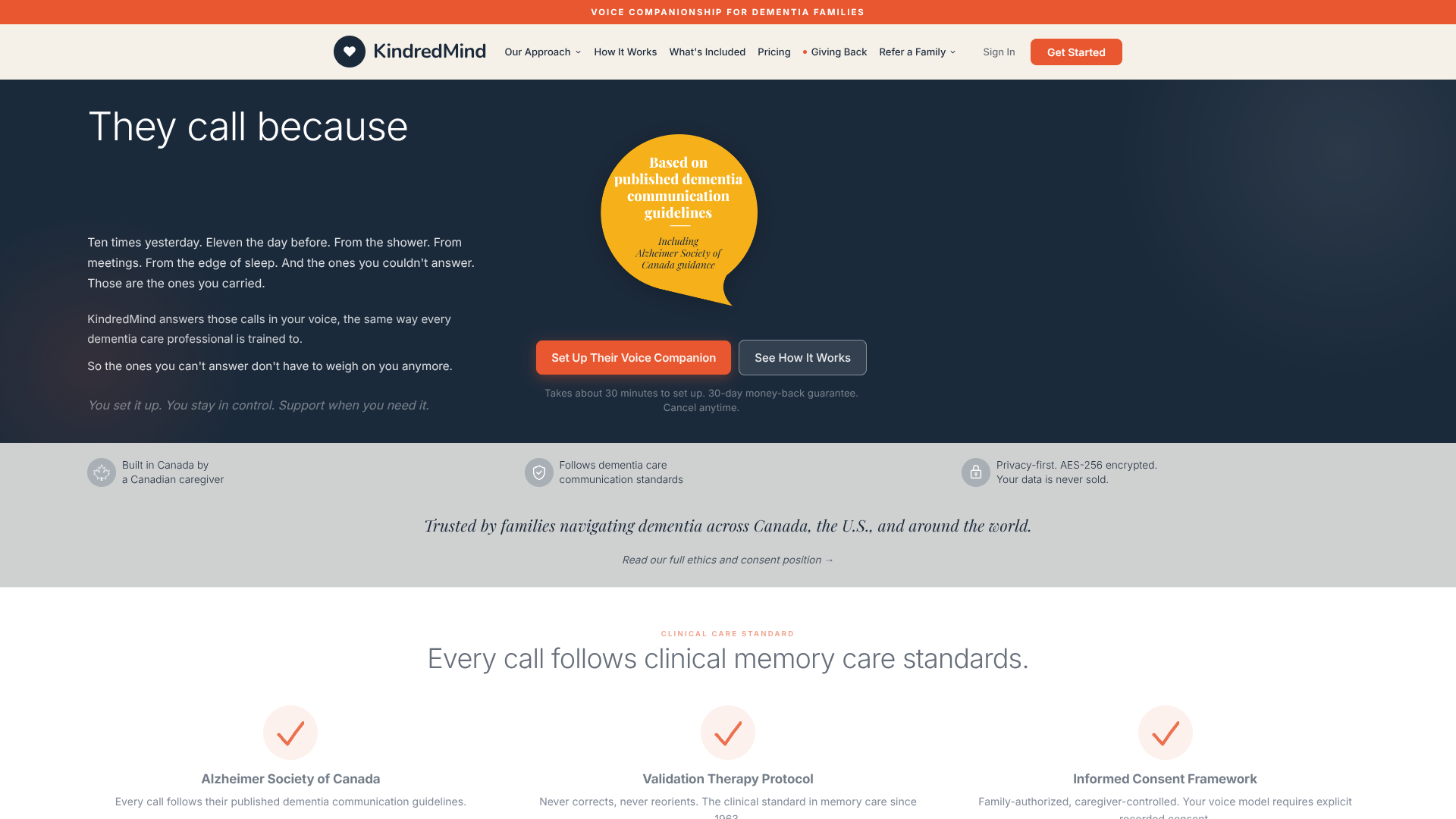
About KindredMindd
Advertiser Disclosure: Futurepedia.io is committed to rigorous editorial standards to provide our users with accurate and helpful content. To keep our site free, we may receive compensation when you click some links on our site.
Key Features
- Living Voice cloning: Builds a caregiver voice from brief recordings and refines it from real calls.
- Clinical conversation engine: Uses GPT 4o and dementia rules that validate feelings instead of correcting facts.
- Personal knowledge base and training calls: Store routines, relationships, stories, and preferences to keep replies specific.
- Call handling tools: Include a dedicated number, auto schedule, live monitoring, emergency detection, and failsafe routing.
Pros & Cons
Pros
- Clinically aligned approach: Mirrors memory care communication, not generic chatbot talk or scripts.
- Caregiver relief: Reduces interruption and guilt by reliably answering calls in a familiar, calm voice.
- Personalization: From the knowledge base and Living Voice makes conversations feel recognizably like the caregiver.
- Supportive onboarding: Strong onboarding, free setup call, trial period, and a library of guides support family members.
Cons
- Cost barrier: Premium monthly pricing may limit access for families with tighter budgets.
- Stage limitations: Only suits mild to moderate stages where the person can still use a phone.
- Tech demands: Requires comfort with phone routing and apps, which can be stressful for some caregivers.