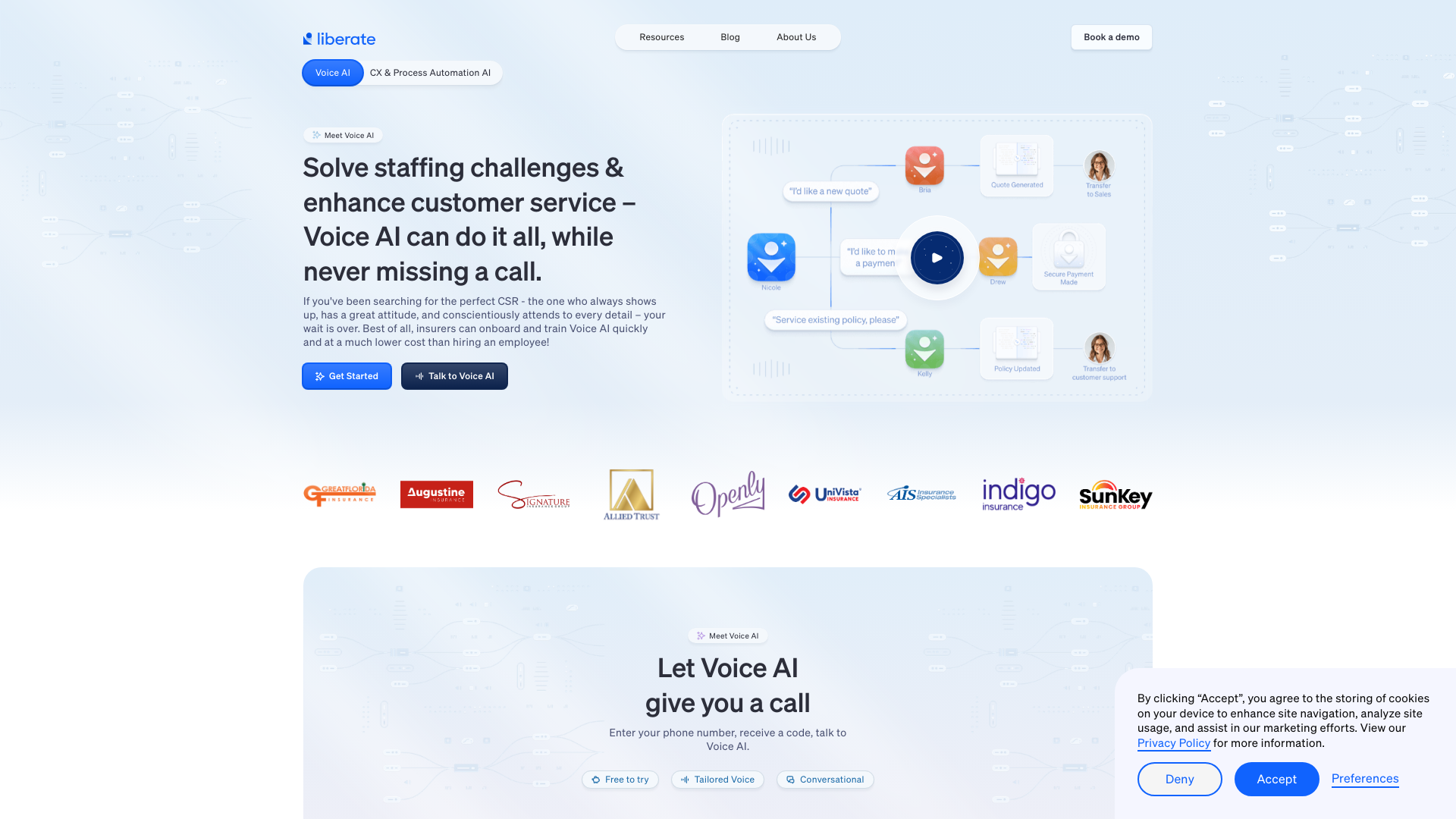
About Liberate
Advertiser Disclosure: Futurepedia.io is committed to rigorous editorial standards to provide our users with accurate and helpful content. To keep our site free, we may receive compensation when you click some links on our site.
Key Features
- Claims Automation: Streamlines the entire claims process from First Notice of Loss (FNOL) to settlement, reducing manual efforts and speeding up service delivery.
- Underwriting Workbench: Enhances underwriting efficiency with automated data extraction and decision-making support, leading to quicker risk assessment and policy issuance.
- Digital Quote & Bind: Automates the quoting and binding process, allowing for real-time policy management and issuance without human intervention.
- Document AI & Inference: Employs advanced AI to analyze and process documents, extracting relevant data automatically and reducing errors.
- Comprehensive Integration Capabilities: Seamlessly connects with major insurance platforms like Guidewire, Duck Creek, and others, enhancing existing IT ecosystems.
Pros & Cons
Pros
- Enhanced Customer Experience: Provides end-to-end digital solutions that enhance customer interactions and satisfaction.
- Operational Efficiency: Reduces manual processes significantly, leading to lower operational costs and faster turnaround times.
- Scalability: Adapts to various insurance product lines and company sizes, making it versatile for different business needs.
- Data-Driven Insights: Offers powerful analytics tools that help in making informed decisions based on accurate, real-time data.
Cons
- Initial Setup Complexity: The integration process can be complex, requiring substantial initial setup and customization.
- Training Requirement: New users require training to fully utilize all the features and capabilities of the platform.
- Dependency on Third-Party Platforms: While integration is a strength, it also creates dependency on other systems for full functionality.