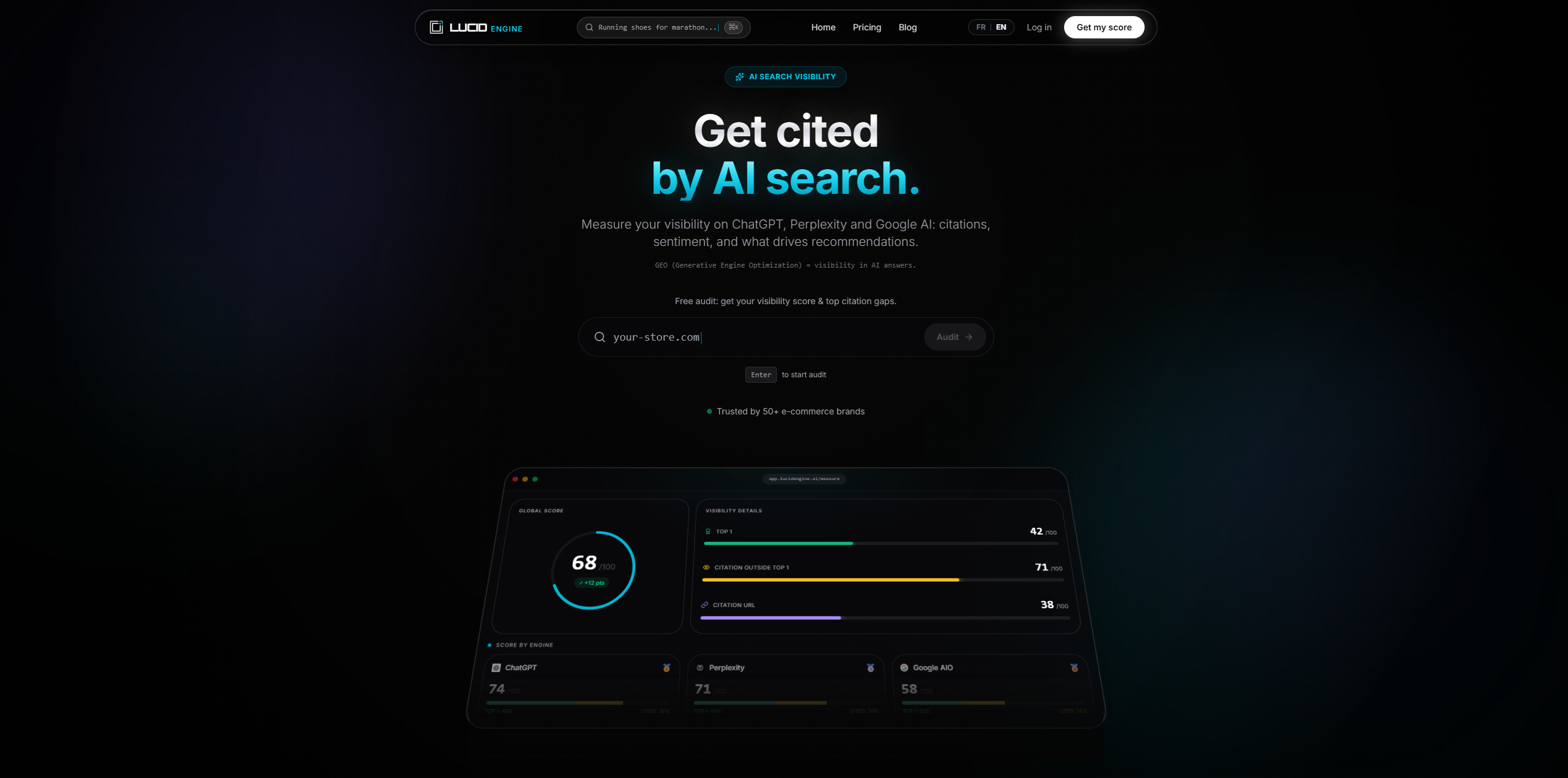
About Lucid Engine
Advertiser Disclosure: Futurepedia.io is committed to rigorous editorial standards to provide our users with accurate and helpful content. To keep our site free, we may receive compensation when you click some links on our site.
Key Features
- E‑commerce Stack Integrations: Aligns with Shopify, Magento, and WooCommerce, reflecting its focus on catalog‑driven brands that need AI to mention products correctly in shopping‑type queries.
Pros & Cons
Pros
- AI‑native GEO focus: Built specifically around being cited in AI answers rather than classic blue‑link SEO rankings.
- Actionable diagnostics: The P0/P1/P2 backlog and impact estimates turn abstract visibility scores into concrete next steps for content, schema, and technical fixes.
- Strong competitive context: Share‑of‑voice visualizations make it easy to spot rising rivals and shifting AI preferences before traffic drops show up in analytics.
- Monitoring of model shifts: Volatility timelines and continuous prompt tracking help teams link visibility swings to AI model updates instead of guessing what changed.
- Geo and source breakdowns: City‑level answers, sentiment, and source‑type splits (brand, editorial, UGC, marketplaces) provide more nuance than a single blended score.
Cons
- E‑commerce centric: Brands outside transactional or catalog‑driven use cases may find some depth, such as SKU‑level actions, less relevant.
- Prompt quality dependency: Insights depend heavily on how well strategic prompts are chosen and maintained, which can be a new skill set for many teams.
- Early category maturity: GEO as a practice is still young, so linking visibility scores directly to revenue outcomes will take testing and internal education.