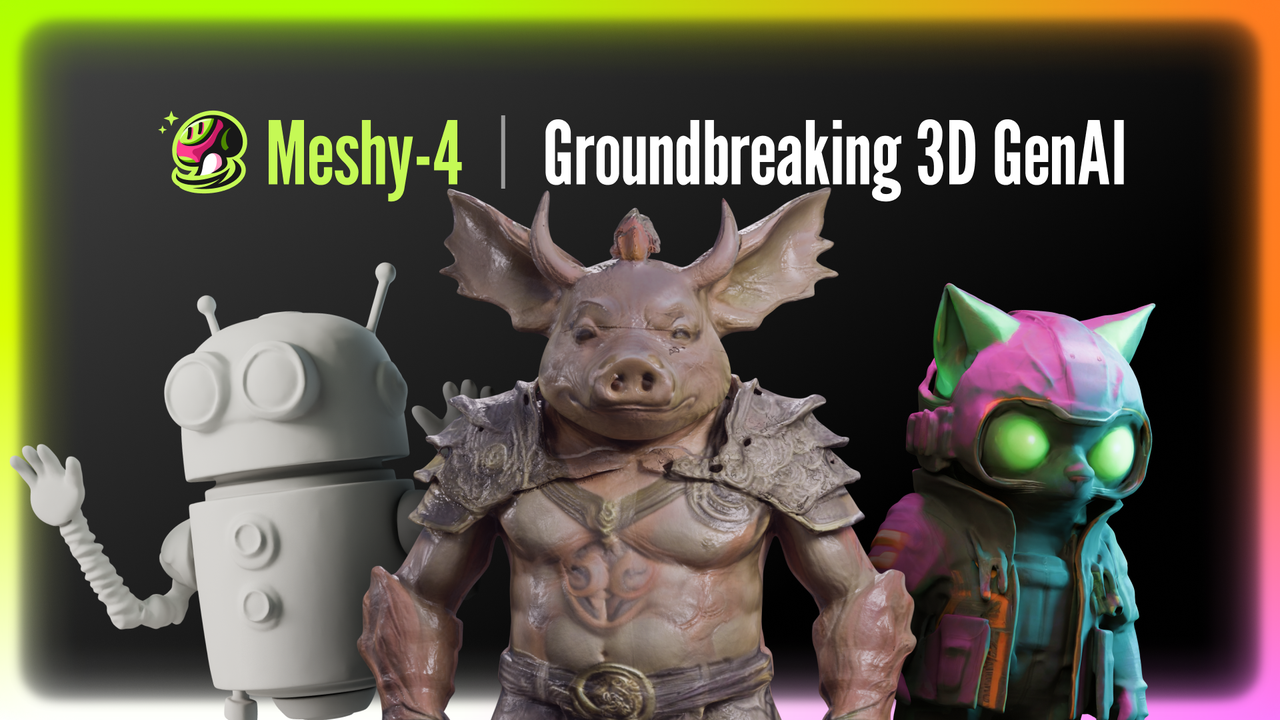
About Meshy
Meshy is
Key Features
- Text to 3D Conversion: Generate complex 3D models from simple text descriptions, opening up a world of creativity for users with no prior 3D experience.
- Image to 3D Capability: Turn 2D images into 3D models quickly, leveraging the AI's understanding of depth and form.
- AI Texturing: Create high-quality textures from text prompts or concept art, significantly reducing the time spent on texturing.
- Rapid Workflow Integration: Designed for lightning-fast performance, Meshy integrates smoothly with standard industry workflows.
- Diverse Art Styles: Supports a range of art styles, from voxel to photorealistic, catering to various creative needs.
- Intuitive User Interface: The tool offers a simple and user-friendly interface, making it accessible even to those who aren't 3D modeling experts.
- Multilingual Support: Users can write prompts in their native language, making the tool more accessible worldwide.
- API Integration: Developers can integrate Meshy's capabilities into their own applications, enhancing their software's functionality.
- Export Options: Models can be exported in formats like FBX, GLB, or USDZ for compatibility with other software.
Pros & Cons
Pros
- Efficiency Boost: Drastically reduces the time required for 3D modeling and texturing tasks.
- Ease of Use: Features an intuitive interface that simplifies the 3D creation process.
- Quality Output: Produces high-quality, customizable PBR textures and realistic 3D models.
- Versatility: Offers support for various art styles and export formats, ensuring broad usability.
- API Access: Allows for custom integrations, extending the utility of the tool beyond its standalone capabilities.
Cons
- Learning Curve: Users may need time to get accustomed to the AI's capabilities and how to formulate effective prompts.
- Dependency on AI Interpretation: The quality of the output may vary depending on the AI's understanding of the user's input.
- Limited by Current Tech: While advanced, the tool's capabilities are still bound by the limitations of current AI technology.