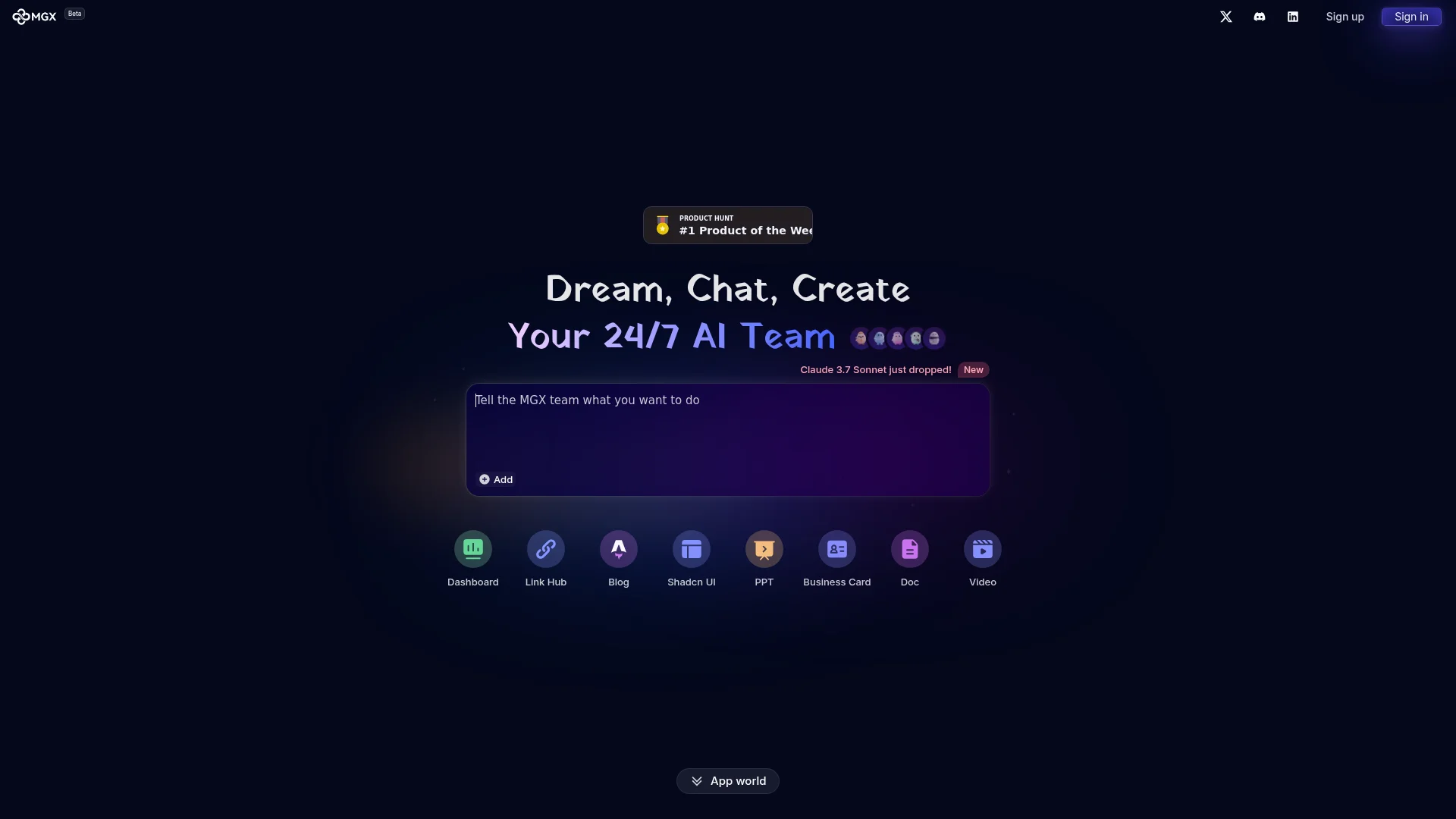
About MetaGPT
Advertiser Disclosure: Futurepedia.io is committed to rigorous editorial standards to provide our users with accurate and helpful content. To keep our site free, we may receive compensation when you click some links on our site.
Key Features
- Multi-Agent Collaboration: Assigns roles like team lead, engineer, and analyst to AI agents to emulate a real-world dev team.
- Natural Language Interface: Lets users input goals and requirements using plain language, making development accessible to non-coders.
- 24/7 Availability: Offers continuous project support without delays, allowing faster iteration and execution.
- Structured Development Workflow: Follows software development best practices, ensuring consistency, scalability, and quality output.
- End-to-End Project Delivery: Manages everything from ideation to final implementation, including documentation and testing.
Pros & Cons
Pros
- Enhanced Productivity: Reduces time-to-build by simulating multiple team roles working simultaneously.
- Cost Efficiency: Eliminates the need for hiring a full development team for many use cases.
- Accessibility: Non-technical users can create software solutions without writing a single line of code.
- Scalability: Supports both simple websites and complex SaaS applications within the same workflow.
Cons
- Learning Curve: New users may take time to fully understand how to prompt and utilize different agents effectively.
- Dependence on Prompt Clarity: The final output depends heavily on how well a user communicates their goals.
- Limited Deep Customization: May not support edge-case requirements or very specific technical implementations.