About Moda
Advertiser Disclosure: Futurepedia.io is committed to rigorous editorial standards to provide our users with accurate and helpful content. To keep our site free, we may receive compensation when you click some links on our site.
Key Features
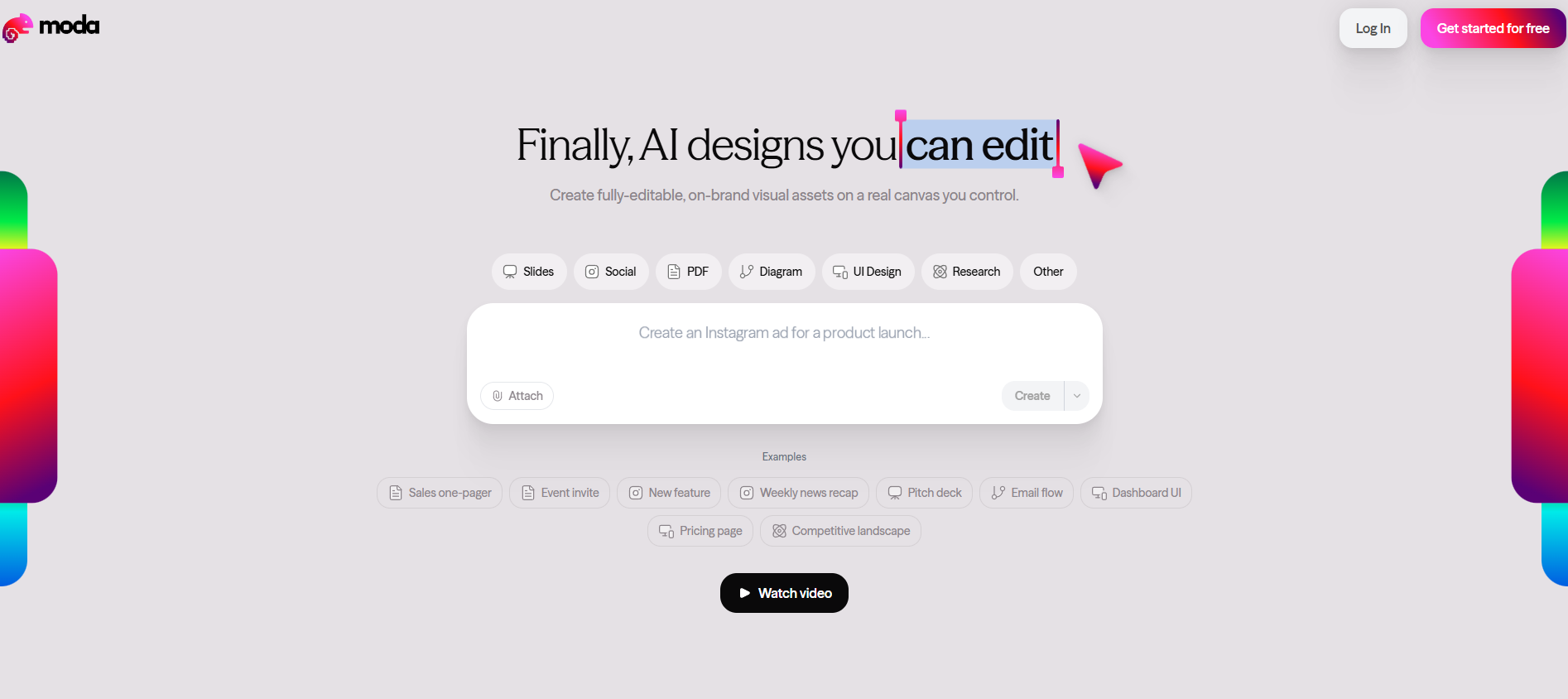
- AI-generated layouts and slides: Turn prompts or rough ideas into structured decks and one-pagers for sales, launches, events, and updates in a few steps.
- Fully editable canvas: Every AI result becomes live text, shapes, and components, so users can tweak copy, spacing, colors, and hierarchy instead of being stuck with static images.
- Multi-format asset support: Produce slides, social graphics, PDFs, diagrams, UI-style screens, and research summaries from the same workspace to keep brand expression consistent.
- Template remixing: Start from curated examples, then remix them with your own content to quickly adapt quarterly updates, feature announcements, or hiring materials.
- On-brand defaults: Built-in attention to layout and typography helps non-designers stay visually consistent across decks and documents.
Pros & Cons
Pros
- Fast content creation: Common assets like sales one-pagers, pitch decks, and social carousels can be produced in minutes instead of hours.
- Quality of structure: AI tends to produce strong page and slide structure, so users spend more time refining messaging than wrestling with layout.
- Good for non-designers: A familiar drag-and-drop canvas plus AI suggestions lowers the barrier for people who are not design specialists.
- Replaces multiple tools: One environment for decks, social, and PDFs can reduce reliance on separate slide, design, and document tools.
Cons
- Feature set still evolving: Power users coming from long-established design suites may miss some advanced animation or interaction options.
- Web-first product: Teams that require strict offline workflows or desktop-only software may find adoption more complex.
- Brand control depth: Large enterprises with very detailed design systems may need to validate whether brand governance features are sufficient.