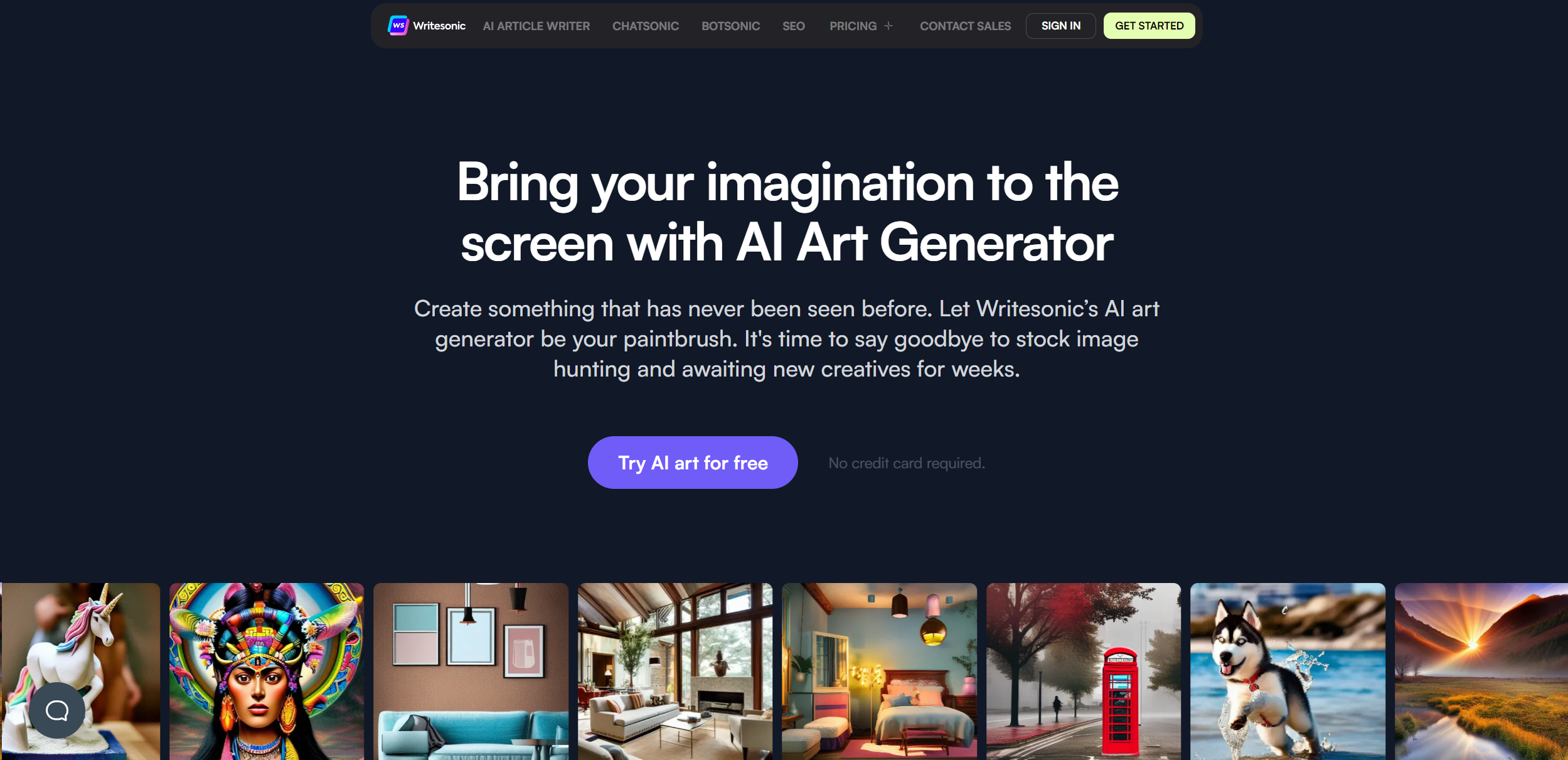
About Photosonic AI
Advertiser Disclosure: Futurepedia.io is committed to rigorous editorial standards to provide our users with accurate and helpful content. To keep our site free, we may receive compensation when you click some links on our site.
Key Features
- Text-to-Art Conversion: Photosonic excels at transforming simple text prompts into detailed images, allowing users to generate art that aligns precisely with their vision.
- Variety of Art Styles: Whether you need a minimalist illustration, a vibrant portrait, or an abstract design, Photosonic can cater to a broad spectrum of aesthetic preferences.
- Rapid Image Generation: Create multiple art pieces in seconds, significantly reducing the time traditionally required for artistic creation and iteration.
- High-Quality Outputs: The AI ensures that each generated image is of high resolution and quality, suitable for professional use across various media.
Pros & Cons
Pros
- Cost-Effectiveness: Reduces expenses on stock images and art creation, providing a cost-efficient alternative.
- Time-Saving: Streamlines the content creation process, allowing for rapid development of ideas and concepts.
- Customization: Offers extensive customization options in art style and composition through user-friendly prompts.
- Accessibility: Makes art creation accessible to non-artists, democratizing the ability to produce visually appealing content.
Cons
- Creativity Limitations: While versatile, the AI might not fully replicate the nuance and emotion conveyed by human artists.
- Learning Curve: New users may need time to learn how to best formulate prompts to achieve desired results.
- Dependence on Descriptions: The output quality heavily depends on the user’s ability to provide clear and detailed descriptions.