About Pine AI
Advertiser Disclosure: Futurepedia.io is committed to rigorous editorial standards to provide our users with accurate and helpful content. To keep our site free, we may receive compensation when you click some links on our site.
Key Features
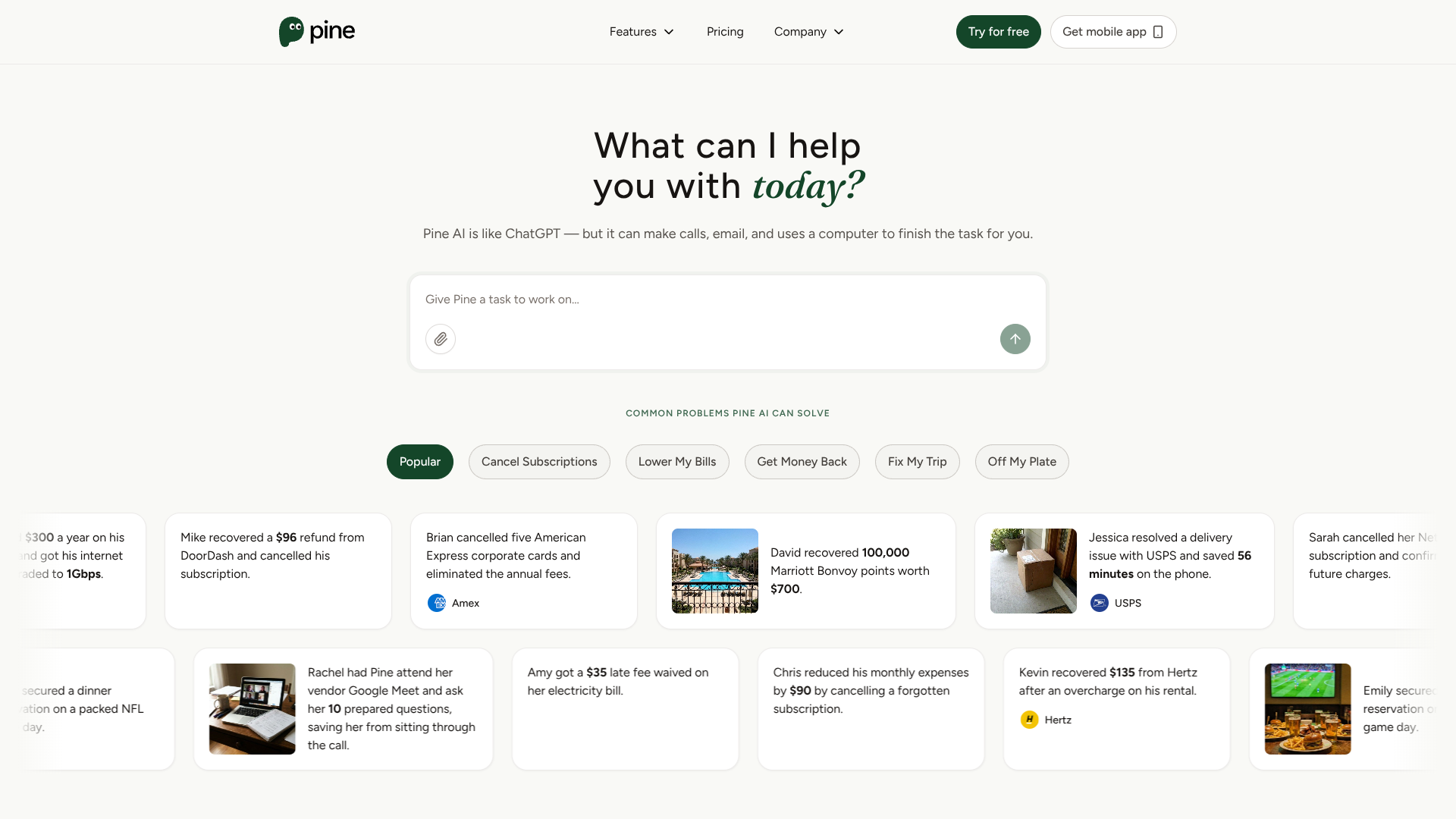
- Autonomous calling and emailing: Uses AI to place calls, send emails, and complete web forms for users, including negotiation, escalation, and routine follow up.
- Bill and fee negotiation: Targets telecom, utilities, banking, and medical providers to request rate reductions, fee waivers, and corrections of incorrect or surprise charges.
- Travel and service coverage: Handles airline, hotel, and car rental issues such as delays, lost baggage, and poor service, seeking credits or compensation where possible.
- Security focused architecture: Stores data in encrypted form and only exposes essentials during calls or written disputes, aiming to keep control with the user.
Pros & Cons
Pros
- Huge time savings: Average user reportedly saves around 270 minutes of waiting and arguing with customer service agents.
- Strong results on bills: Telecom and cable bills are often reduced by about 20 percent, with many complaints yielding small cash or credit compensation.
- Success based pricing: Users only pay when Pine AI completes a task successfully, which reduces the risk of paying for failed negotiations.
- Broad coverage out of the box: Works across telecom, banking, airlines, hotels, utilities, subscriptions, and more without users needing custom setups or scripts.
Cons
- Limited transparency during live interactions: Because calls and messages happen in the background, some users may wish for finer control or real time oversight of what is said.
- Merchant specific variability: Results depend heavily on the policies of each company, so savings and outcomes can vary quite a bit between providers.
- Unclear effective pricing per task: Tip based, pay as you go billing can make it harder to predict the total cost before a complex case is resolved.