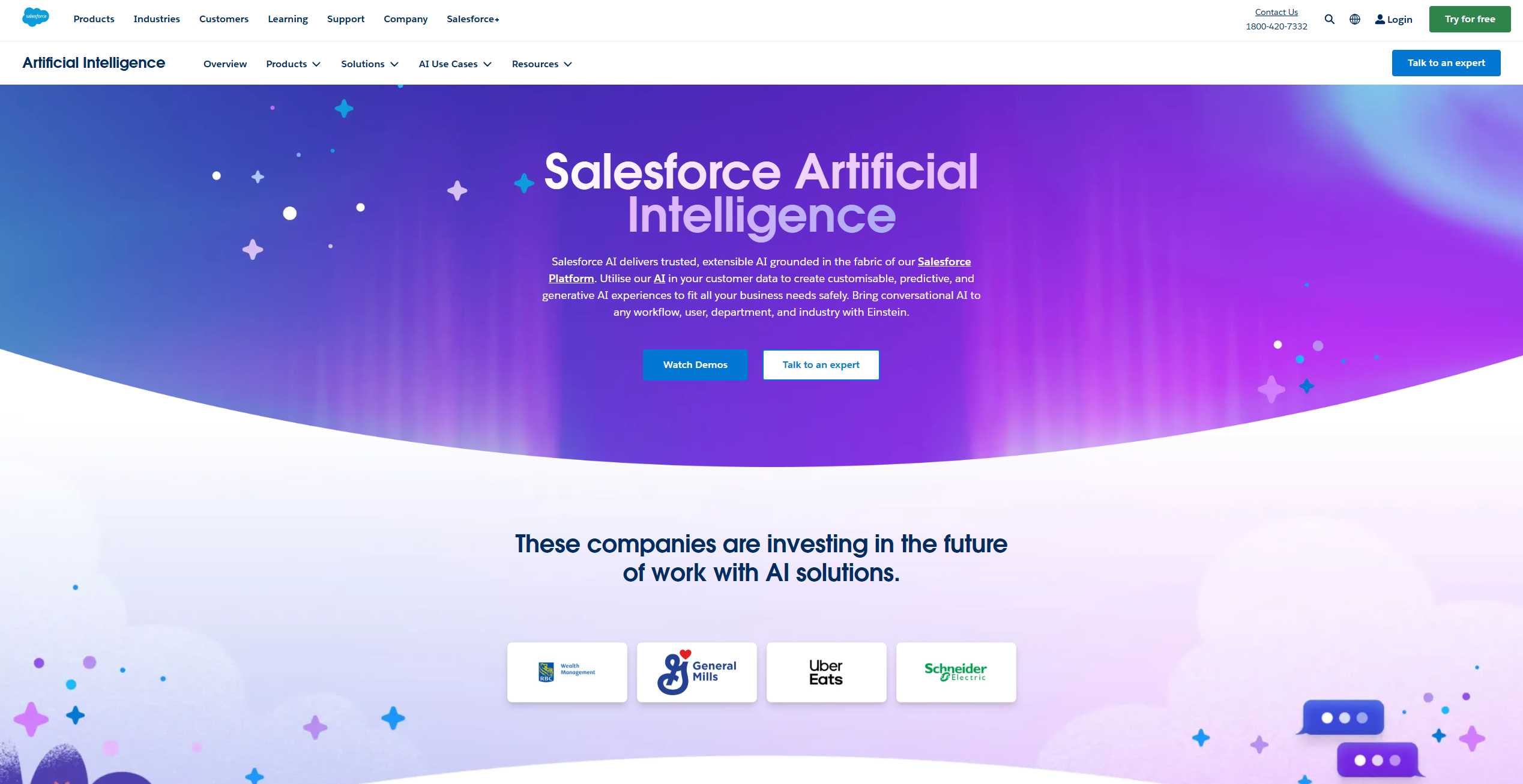
About Salesforce AI
Advertiser Disclosure: Futurepedia.io is committed to rigorous editorial standards to provide our users with accurate and helpful content. To keep our site free, we may receive compensation when you click some links on our site.
Key Features
- Predictive Analytics: Salesforce AI utilizes advanced algorithms to deliver real-time predictions, helping businesses anticipate customer needs and optimize decision-making.
- Generative AI Capabilities: Create and deploy assistive AI experiences that automate content generation, such as sales emails and customer service replies, enhancing efficiency.
- Conversational AI Integration: Seamlessly embed conversational AI into workflows, enabling direct interactions through tools like Agentforce for faster issue resolution.
- Einstein Trust Layer: Built-in security features ensure data privacy and ethical AI use, safeguarding sensitive customer information while enabling AI deployment.
Pros & Cons
Pros
- Enhanced Personalization: Offers deep insights into customer behaviors, allowing businesses to tailor interactions and improve customer satisfaction.
- Scalability: Easily integrates with existing Salesforce applications, making it adaptable to various business sizes and industries.
- Time-Saving Automation: Automates routine tasks like email generation and case summarization, freeing up valuable time for strategic activities.
- Robust Data Security: The Einstein Trust Layer provides a secure environment, ensuring compliance with data protection standards.
Cons
- Complex Setup: Initial integration with existing systems may require technical expertise and time.
- Cost Considerations: While offering extensive features, the cost may be a factor for smaller businesses with limited budgets.
- Learning Curve: Users may need time to fully leverage advanced features and customization options.