About Timelaps
Advertiser Disclosure: Futurepedia.io is committed to rigorous editorial standards to provide our users with accurate and helpful content. To keep our site free, we may receive compensation when you click some links on our site.
Key Features
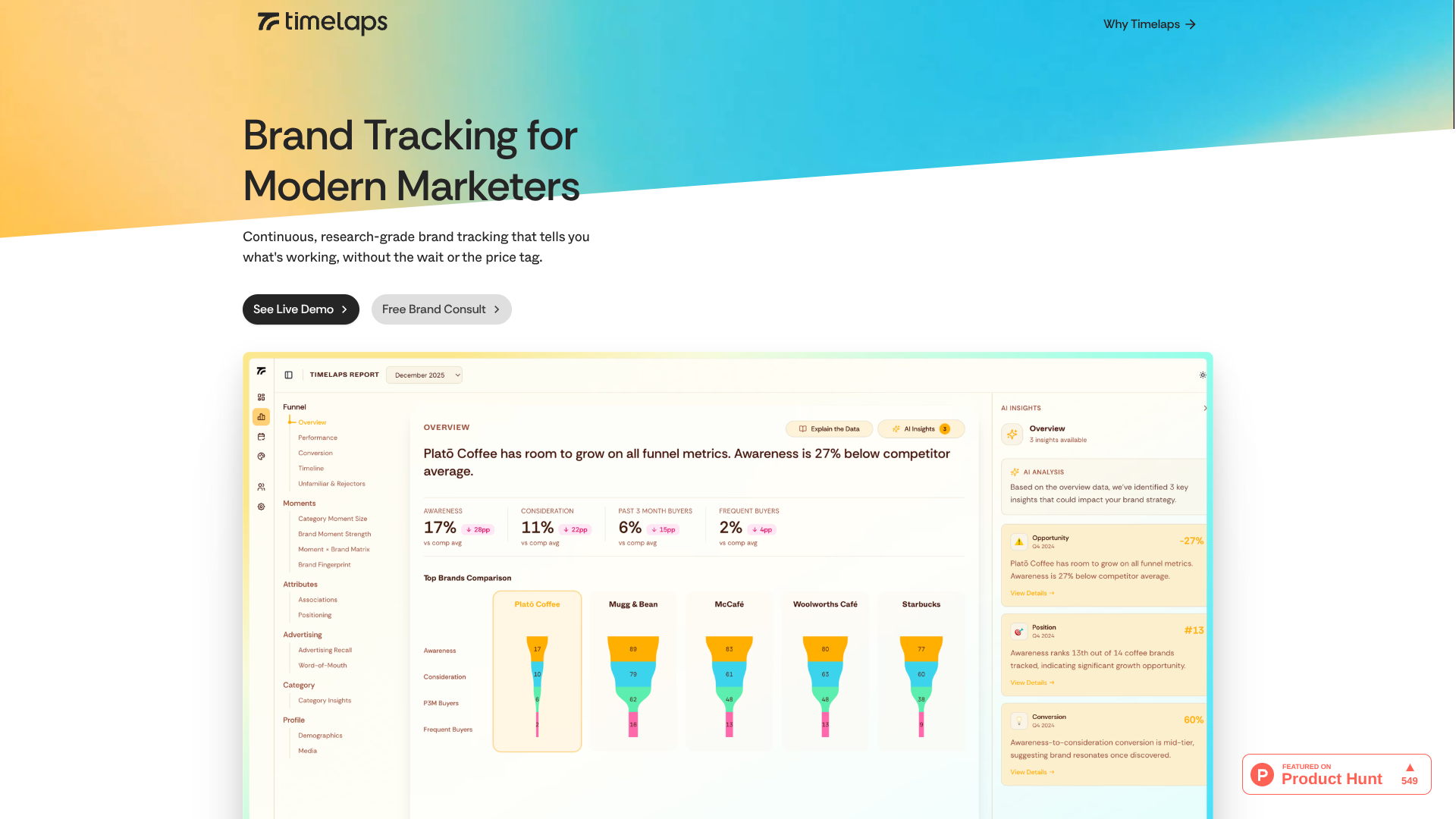
- Always-on brand funnel tracking: Monitors awareness, consideration, purchase, and loyalty across your brand and competitors, refreshed monthly so teams see trends rather than one-off snapshots.
- AI-generated commentary: Every dashboard view comes with AI-written explanations that highlight key movements, patterns, and anomalies so non-researchers can interpret charts without a stats degree.
Pros & Cons
Pros
- Continuous clarity: Monthly updates mean brand teams are not waiting quarters for results and can spot trend shifts early.
- Research-grade at lower cost: Built by veteran brand researchers, it retains serious methodology while sitting at a fraction of classic tracker pricing.
- All-in-one dashboard: Replaces dense PowerPoint decks and scattered spreadsheets with one interface that covers funnel, moments, associations, and audience views.
- AI insight layer: Automated summaries reduce the effort needed to interpret new data drops, which is especially handy for busy CMOs and founders.
- Fast setup and rollout: Studies are configured in days, with a baseline read in weeks, making it practical even for teams under launch pressure.
- Human support: Each client gets a Timelaps expert to help design, interpret, and socialize findings internally.
Cons
- Price ceiling for small teams: Around $30,000 per year will still feel heavy for very small businesses or early bootstrapped startups.
- Less custom than bespoke trackers: While the coverage is broad, brands that want highly tailored questionnaires or niche KPIs may miss the infinite customization of a fully custom agency study.
- Limited integration detail: The product story leans more on dashboards than on plugging data directly into existing BI stacks, which some enterprises may prefer.