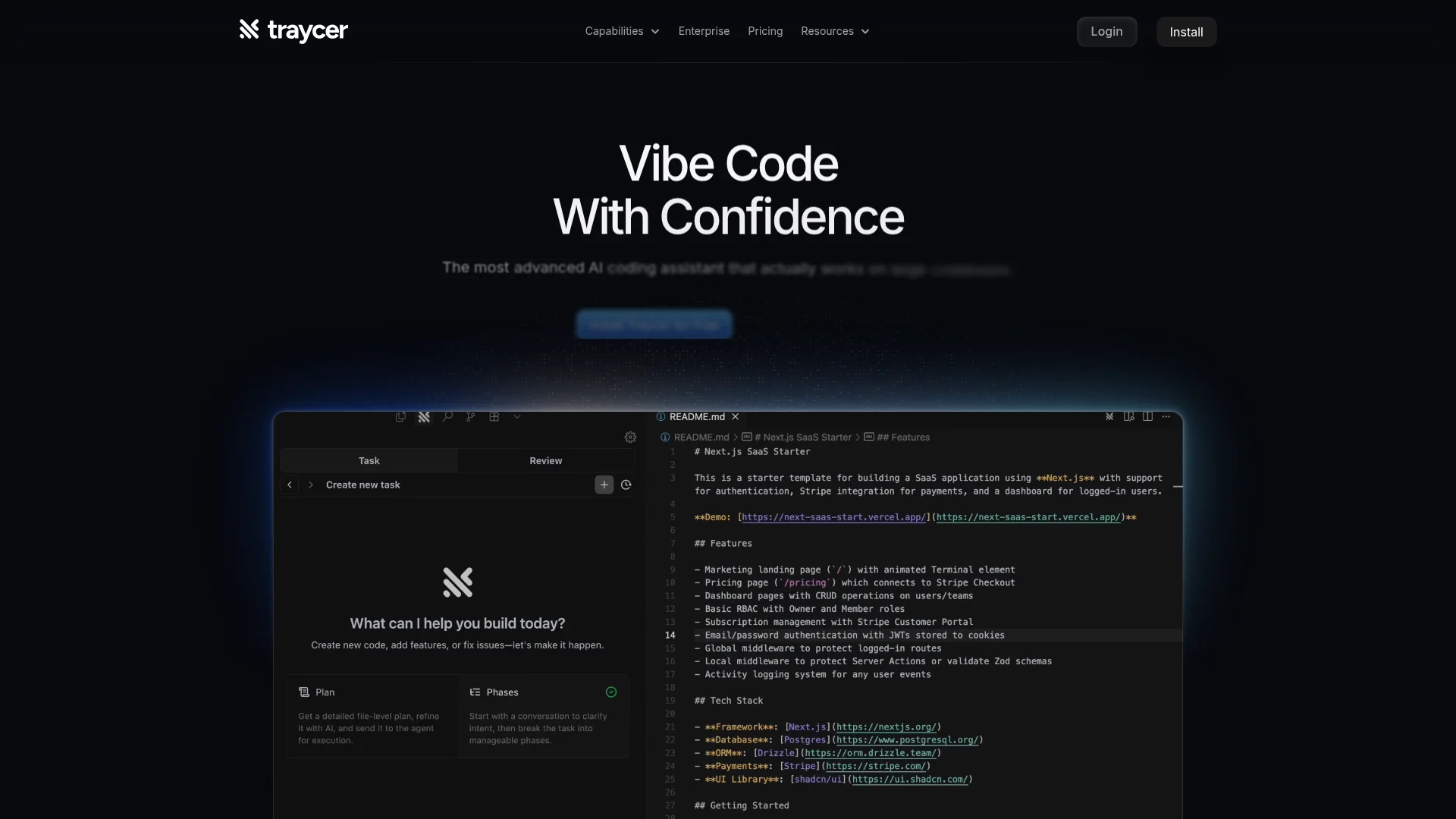
About Traycer
Advertiser Disclosure: Futurepedia.io is committed to rigorous editorial standards to provide our users with accurate and helpful content. To keep our site free, we may receive compensation when you click some links on our site.
Key Features
- Spec-Driven Development: Traycer starts each task with a comprehensive, actionable plan, ensuring that developers can iterate on ideas rather than cryptic code.
- Parallel Agents: Allows multiple planning agents to work in the background, significantly speeding up task completion.
- One Click Hand-Off: Once a plan is complete, code can be generated with just a click using popular AI agents like Cursor and Claude Code.
- Verification and Guardrails: Traycer scans the codebase to verify AI-generated changes, implementing course corrections to prevent bad code from reaching production.
Pros & Cons
Pros
- Time Efficiency: Dramatically reduces feature development time, turning multi-day tasks into mere hours.
- Enhanced Planning: Provides a structured approach to coding, which helps in maintaining codebase coherence.
- User-Friendly Interface: The intuitive design makes it easy for developers to understand and interact with the tool.
- Integration Flexibility: Compatible with all major AI coding agents, allowing for flexible execution across platforms.
Cons
- Initial Learning Curve: New users might take some time to get accustomed to the advanced planning features.
- Limited Third-Party Integrations: While flexible with AI agents, it may lack broader integration with other development tools.