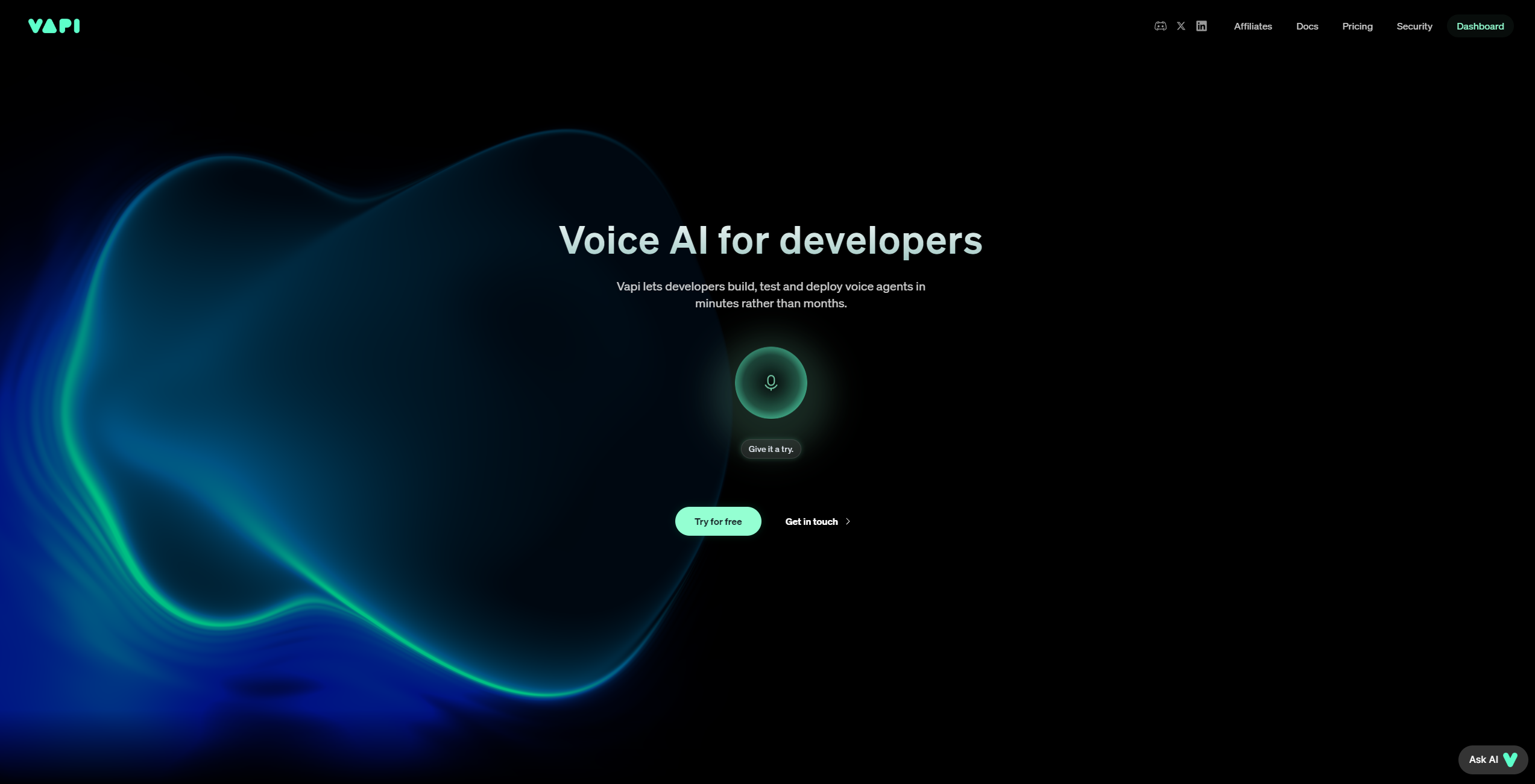
About Vapi
Transform apps with advanced, multi-language voice AI; easy integration, scalable.
Key Features
- Advanced Voice Recognition: Vapi employs sophisticated AI to accurately interpret and transcribe spoken words into text, making it an invaluable tool for voice-controlled applications.
- Natural Language Processing (NLP): It understands and processes human language, allowing developers to create applications that can engage in meaningful conversations with users.
- Text-to-Speech Synthesis: Vapi can convert text into lifelike speech, enabling applications to communicate with users through natural-sounding voices.
- Multi-Language Support: Catering to a global audience, Vapi supports multiple languages, breaking down language barriers in app development.
- Easy Integration: Designed with developers in mind, Vapi offers straightforward integration into existing applications, making it accessible for projects of all sizes.
Pros & Cons
Pros
- Enhanced User Experience: By enabling voice interactions, Vapi significantly improves the usability and accessibility of applications.
- Increased Development Efficiency: Developers can save time and resources by utilizing Vapi's robust voice AI capabilities instead of building them from scratch.
- Scalability: Vapi is built to scale, supporting everything from small projects to enterprise-level applications.
- Cost-Effective: With Vapi, developers can access advanced voice AI functionalities without incurring exorbitant costs.
Cons
- Learning Curve: New users may require some time to fully grasp the integration processes and capabilities of Vapi.
- Internet Dependency: For optimal performance, Vapi relies on a stable internet connection, which could be a limitation in low-connectivity areas.