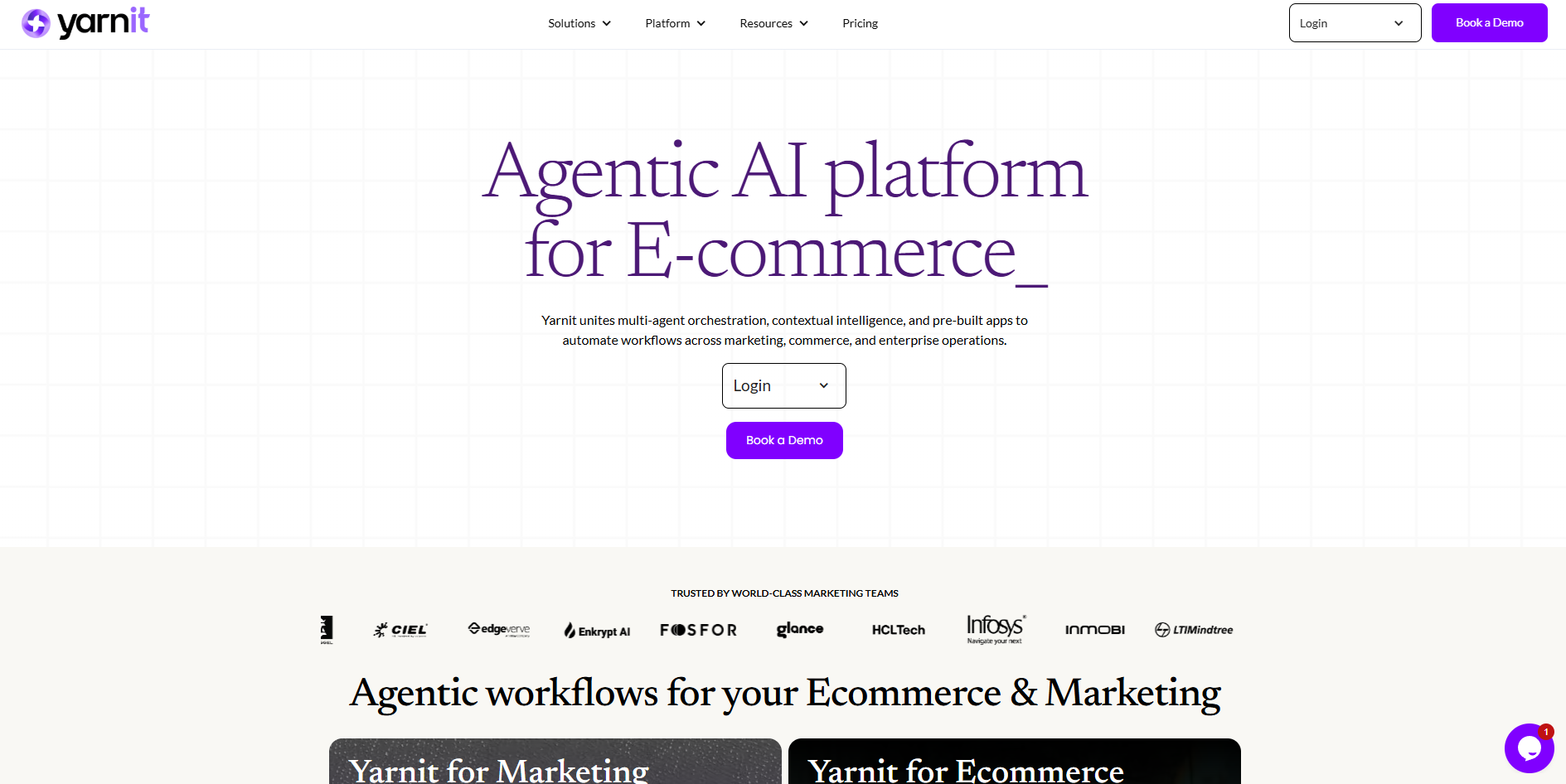
About Yarnit
Advertiser Disclosure: Futurepedia.io is committed to rigorous editorial standards to provide our users with accurate and helpful content. To keep our site free, we may receive compensation when you click some links on our site.
Key Features
- Prebuilt agents and apps: Around 85+ prebuilt agents and 90+ apps for recurring marketing and commerce tasks, from ad copy and social posts to market intelligence and reporting.
- Enterprise-grade platform: Encryption, compliance-focused security, zero-trust posture, and flexible deployment options including SaaS, APIs, and on-premise setups.
Pros & Cons
Pros
- Marketing-first design: Built specifically for marketing, ecommerce, and go-to-market teams rather than being a generic text generator.
- Huge time savings: Customer stories point to content creation cycles shrinking from roughly an hour to a few minutes, with better ad approval rates and traffic lifts.
- Strong ecommerce depth: Direct support for PDPs, seasonal catalog updates, and lifestyle creatives makes it attractive for retailers and consumer brands.
- Brand consistency at scale: Central brand voice, personality, and visual guideline controls help large teams keep messaging aligned across channels.
- Enterprise readiness: Security posture, deployment options, and custom workflow support suit regulated industries and larger organizations.
Cons
- Pricing transparency: Public, line-item pricing is limited, so many teams will need a demo or sales call to understand total cost.
- Learning curve for full power: Getting the most from multi-agent workflows, brand hubs, and custom workflows can take time and process change.
- Best suited to serious teams: Solo creators or very small teams with light needs may find the enterprise focus more than they require.